
In a few weeks, Salem City Council will decide whether to change its current city seal. Local Asian American and Pacific Islander (AAPI) community members have repeatedly called for replacing the seal, which depicts an Acehnese merchant (as seen through the lens of Salem's white aldermen in 1839).
Most people—including most Salem residents—are unaware of the city's trading history with Aceh. Even knowing this history, it is not obvious that the man depicted on our seal is an Acehnese merchant. The average person viewing the seal likely assumes that this man is Chinese thanks to widespread ignorance about Asian cultures and anti-Asian tropes in our media. The placement of a dove with an olive branch above the head of an Acehnese merchant whitewashes the violence, racism and exploitation of U.S. maritime trade with Asia during the nineteenth century. Furthermore, in the year 2026, it is grossly inappropriate for a person from a historically marginalized community to be used as a mascot or symbol.
The city began its official review of the seal over two years ago. The evaluation process has entailed multiple City Council and Racial Equity Commission meetings. A special task force established by City Council has recommended that the seal be changed. And now, hopefully, the City Council will vote to accept this recommendation.
The public discourse around the seal has been brutal and ugly. AAPI residents have been repeatedly belittled, gaslit, and ignored. Ardent supporters have focused on the intentions of the wealthy white aldermen who supposedly designed the seal as to express admiration for their Acehnese trading partners. They also have fixated on the views of a small group of Acehnese people who are honored by the seal. To justify this centering of Acehnese people, they regurgitate bastardized Diversity Equity and Inclusion (DEI) concepts.
This effort has been led by the two designated historians of the City Seal Task Force, who were outspoken in their support for the seal before the task force had even been established. After the task force released its report with recommendations to change the seal, they released their own unofficial version in protest, which they dubbed the 'Minority Report'. This report has so many issues that there is no way it would survive a peer-review process. Several academics have refuted their whitewashed account of Salem's maritime history, including a leading scholar of Asian American history and culture on faculty at Harvard University.
I spent weeks watching City Seal Task Force and City Council meetings and reading articles cited by the 'Minority Report' and by the historians who have refuted it. I have been repeatedly appalled by how intellectually dishonest and vicious the public debate has been. This has motivated me to write several articles examining my research, largely framed around refuting the current arguments for keeping the seal.
 Isa Leshko
Stand With Salem's AAPI Community
Here are things you can do to stand with the local AAPI community.
- LEARN as much as you can from the materials I have provided and share these articles and/or your knowledge with your friends and neighbors.
- ADVOCATE for changing the seal by writing to Salem City Council. I have created a toolkit to help with this outreach.
- Stay tuned for details on providing public comment at the September 10th City Council Meeting.
 Isa Leshko
- ENGAGE thoughtfully with the artwork in Afterimages: Retracing BIPOC History in the Old China Trade that is on exhibit at Old Town Hall from August 27-September 17.
- Opening Reception: Thursday, August 27th from 5-7 PM
- Panel Discussion at the Peabody Essex Museum: Saturday, August 29th from 2-4 PM
- Exhibition Tour With Artists: Tuesday, September 15th, TBD
In This Series
 Isa Leshko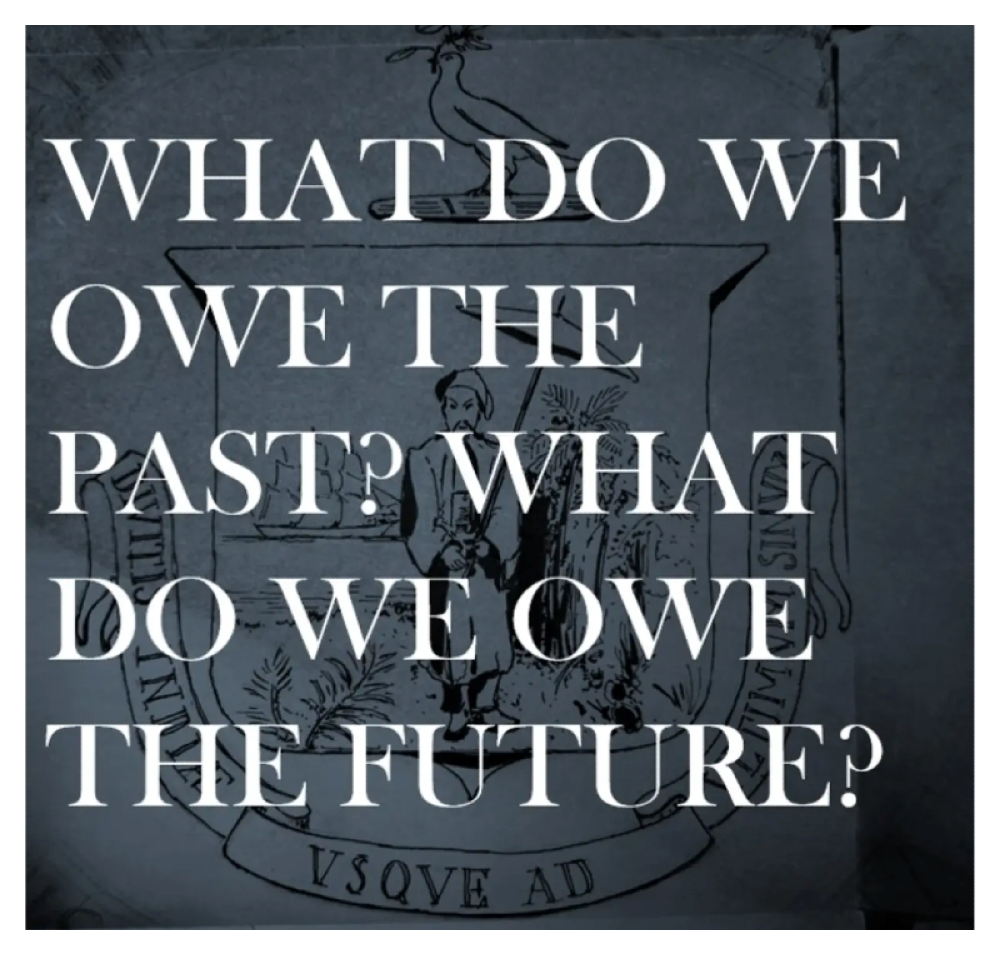
 Isa Leshko
 Isa Leshko
 Isa Leshko
 Isa Leshko
 Isa Leshko