This guest essay was written by local trans poet and filmmaker Olivia Werth.
A few weeks ago, the United States midterm elections resulted in a “blue tsunami” that left a lot of people ecstatic. Many trans people—including me—would have loved to join them in celebrating, but we have found it difficult. In two supposedly safe states—Colorado and Washington—trans youth were stripped of the right to participate in sports with their friends or get basic health care.
Trans people were the focus of hundreds of newspaper articles and news channel segments–discussions that were all about us, but never included us. We were yet again inundated with a constant stream of political advertisements demonizing us, attacking our right to health care, our right to be part of society, our right to exist at all. And we had to watch as dozens of candidates representing the Democratic Party–the party that claims to represent civil rights–joined in the attacks. Even the Democratic Congressional Committee released an ad attacking the rights of trans people.
The level of hatred, fear, and anger directed against us has been overwhelming. And there is a cost to be paid for that. A cost paid with the lives of trans people all around the globe.
Trans Lives Lost This Year
The trans lives we lost this year include May Pollard, a sixteen year old kid from Idaho who took her own life because the constant anti-trans messaging she heard from politicians, classmates, neighbors—along with the roadblocks she faced to get basic medical care—became too much.
And Joelle, who was hospitalized in the United Kingdom with an aggressive lymphoma that is usually curable if treated immediately. For sixteen days, she was denied life-saving care because the hospital refused to give her a bed on the cancer ward. For sixteen days, she waited in excruciating pain for a rare private room to become available. This delay in receiving emergency chemotherapy cost Joelle her life, all because she was trans. She was only twenty-seven years old.
And Jonathan McKinsey, a forty-year-old Asian-American father living in California who had suffered years of abuse at the hands of his in-laws before reportedly being murdered by them.
Over the last year, hundreds of trans people around the world were murdered, driven to take their own lives, or left to die by institutional neglect. Their names will be among those read at thousands of vigils held around the globe this Friday, November 20 to commemorate Trans Day of Remembrance.
What is Trans Day of Remembrance?
The first Trans Day of Remembrance vigils were held in 1999 in Boston and San Francisco to honor Rita Hester and Chanelle Pickett, two Black trans women who were murdered in Boston just three years apart. In the years since, Trans Day of Remembrance has grown into a global annual observance.
On this day, we come together to mourn those we have lost, to highlight the human cost of the efforts to demonize trans people, and to recommit ourselves to the struggle for trans equality and liberation.
The list of people we mourn this year will once again be over three hundred names long. Over three hundred people lost to bigotry, which is already way too many. But these names are only a small fraction of those we are called upon to remember.
We remember people who were killed by those they knew when they tried coming out.
We remember all of those who died without ever getting to be themselves. People who dreamt of a chance to be the person they were meant to be, but were unable to overcome the fear of what would happen to them if they tried. This fear is stoked every day by reactionary politicians and commentators, by online trolls, and sometimes even by our own loved ones.
We remember those who were forced to detransition because the pressure from family and the world made it too hard for them to be able to hold on to who they are.
We remember all of those lost and buried with names they did not recognize, names forced upon them by families who refused to see them and by a system that would not acknowledge their true identities . Too often we have been left wondering what became of the people we loved under their true names.
We remember and mourn all of them.
We also remember those who came before us.
We Remember Our Ancestors
Trans people have existed for as long as humans have walked this Earth. The earliest priests and priestesses in recorded history, the gala, worshipped the Sumerian goddess Inanna four thousand years ago. They altered their bodies and their clothing to present as a gender other than the ones they were assigned at birth.
The hijra of South Asia, the Ihamana of the Zuni Tribe, the fa’afafine of Samoa, and other Indigenous peoples from around all over the globe have complex gender systems that white colonists tried–and failed–to eradicate through genocidal violence.
 David

We remember Dr. James Barry, the British military surgeon whose advocacy for sanitation and humane treatment of British prisoners and colonists saved countless of lives. After his death in 1865, he was discovered to have been assigned female at birth.
We remember Albert Cashier and the dozens–if not hundreds–like him who enlisted during the Civil War despite having been assigned female at birth. After the war ended, Albert continued to live as a man until he developed dementia and required care. After being outed, he was forced to spend his final years in an asylum wearing a dress.
We remember Sally-Tom, a formerly enslaved Black Trans woman who became the first person to have her gender legally recognized in the United States . After her emancipation, she steadfastly lived as a woman and the Georgia Bureau of Refugees, Freedmen, and Abandoned Lands legally recognized her gender in 1869.
We remember Alan L. Hart, the first trans man known to have received a hysterectomy, sometime around 1917. His work with x-rays developed a screening method for tuberculosis that saved untold lives.
We remember Dora Richter, the first trans woman documented to receive a vaginoplasty in 1931. Historians believed she had died at the hands of the Nazis until they discovered she had survived WWII and had died in 1966 at the age of 74. She had lived in Nuremberg Germany for decades as a well known and loved member of her community.
We remember Stormé DeLarverie,, Marsha P. Johnson, Sylvia Rivera, Miss Major, and the other trans people of color who sparked the rebellion at Stonewall and grew it into a movement–only to be sidelined by people more concerned with respectability than freedom.
We Remember Those Fighting Today
We also remember the people and organizations who keep fighting so those of us who are trans can enjoy those rights our founding fathers called inalienable–life, liberty, and the pursuit of happiness. This fight is being waged nationally by leaders like Raquel Willis and Chase Strangio, and is also unfolding right here in Massachusetts.
The Transgender Emergency Fund of Massachusetts provides homeless transgender, non-binary and gender-diverse people with safe housing, employment, and critical resources necessary for survival.
Trans Resistance MA advocates for the safety, joy, and liberation of Trans, Queer, Black, Indigenous People of Color (TQBIPOC) across Massachusetts. Their work is “guided by values of racial justice, accessibility, restorative justice, rest, and collaboration.”
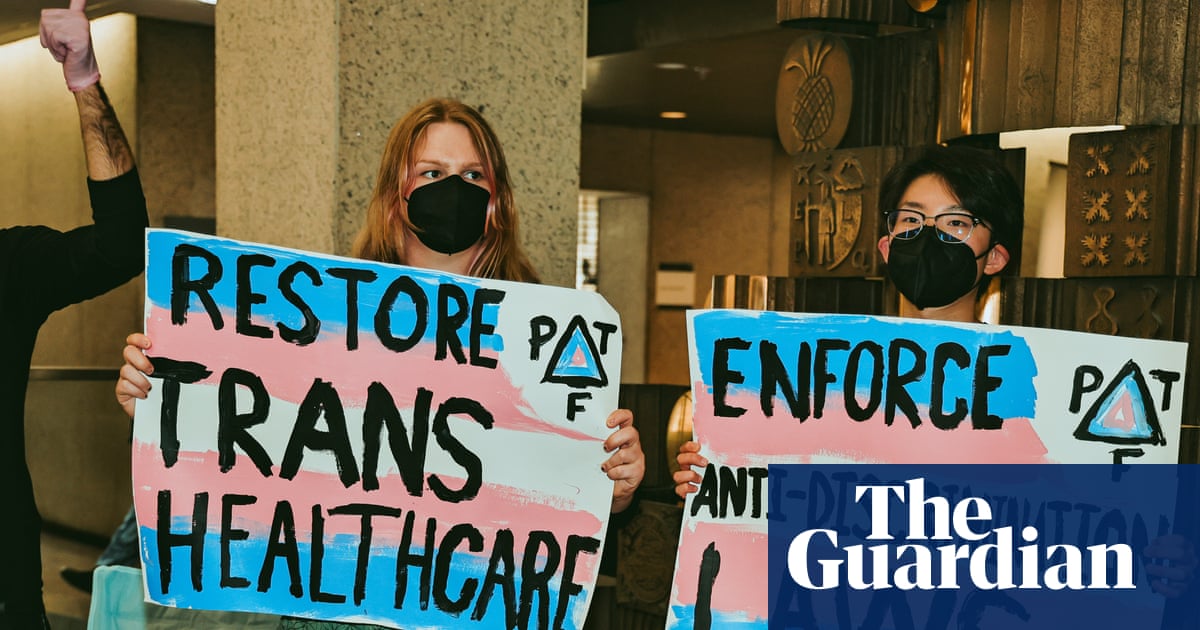
Protect Trans Futures is a direct action and advocacy coalition fighting to protect and expand access to gender affirming healthcare for all trans people, including trans youth, which is guaranteed by state law.
 Lex McMenamin
Katelyn Holappa is currently serving as Salem’s Ward 6 Councillor and is the first openly trans City Councillor in the city’s 400+ year history. Last year she authored a resolution that Salem City Council unanimously passed that declared the city a sanctuary for trans and nonbinary people. Trans people deserve to have a seat at every table where decisions are made, and Salem is a better city thanks to Katelyn‘s leadership.
Trans Day of Remembrance is also a day to honor every trans person who continues to wake up and live despite living in a world that vilifies us because of who we are.
Every breath, every smile, every laugh made by a trans person is an act of resistance that makes the world a more beautiful place.
We Need More From Allies
If you are trans, I am honored to have you as part of my family. Thank you for being here.
If you are not trans, thank you for reading this essay. And please, do more.
We need your help to ensure that the list of names read at next year’s vigil will not be as long as this year's list.
We need you to speak up on our behalf and to call out anti-trans behavior.
We need you to tell politicians and businesses that their success is dependent upon their support for trans rights.
We need you to do all of this because there are not enough of us to make a difference on our own, and because those who hate us refuse to listen to us.

Honoring Trans Resilience
Trans Day of Remembrance was created as a day to remember those we have lost. But it is so much more.
It is a day to remember that people who do not identify with the sex they were assigned at birth have existed for as long as humanity has existed.
It is a day to remember that the Trump Administration is not the first government that has tried to eradicate us. And to remember that governments have always failed to do so.
It is a day to remember that we are still here, and that we deserve to be.
Author Bio
Olivia Werth is a trans woman who has called the North Shore home for the last decade. During those years she has served on the boards of several LGBTQIA+ organizations. Earlier this year she started a new nonprofit, Trans Joy Resistance, dedicated to the idea that being trans is something to celebrate. Olivia is an educator, advocate, writer, poet, and filmmaker who loves nothing more than watching horror movies with her spouse and their cat. She can be reached at olivia@transjoyresistance.com. If you would like to support Olivia’s work, her Venmo is @Olivia-Werth-4.
Local Trans Day of Remembrance Vigils
All events listed below are on Friday, November 20th.
Gloucester @ Noon
Newburyport @ 6 PM
Salem @ 7 PM